
Cleaning your moissanite ring is surprisingly simple. A quick soak in some warm, soapy water followed by a gentle scrub with a soft brush is usually all it takes to bring back that incredible fire. It's this easy, at-home routine that safely cuts through the daily grime that can dull your stone's sparkle. Keeping up with it is the real secret to making sure your moissanite looks just as brilliant as the day you first put it on.
Why Your Moissanite Ring Needs Regular Cleaning
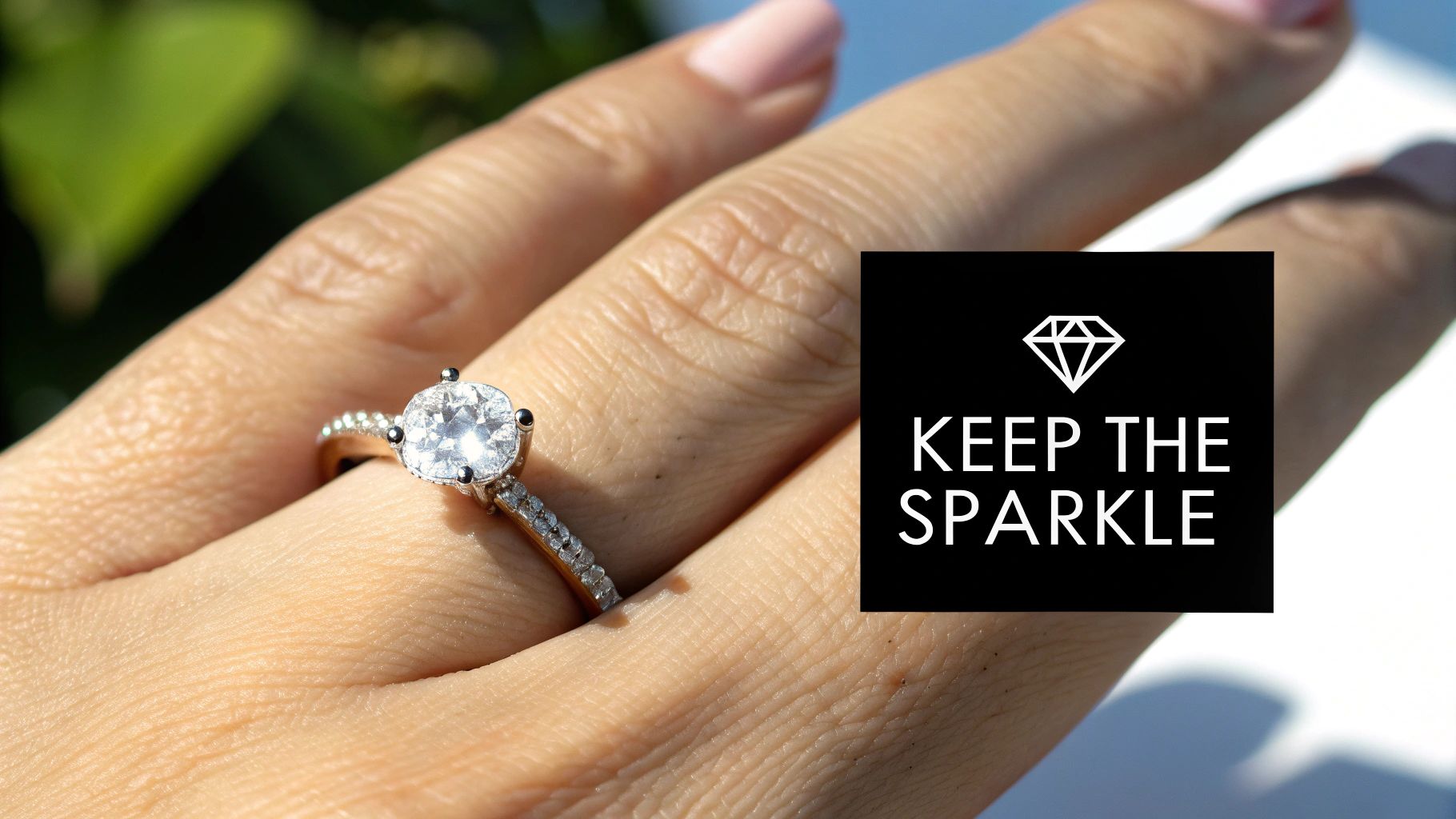
Moissanite is engineered for maximum sparkle, but daily life has a way of dimming that shine. Over time, things you don’t even think about—like hand lotion, hairspray, and even the natural oils on your skin—build up into a stubborn, cloudy film. This layer blocks light from getting into the stone, and without regular cleaning, it can make even the most dazzling moissanite look flat and lifeless.
It’s the little things that add up. Think about your morning routine. Cosmetics, perfumes, and soaps all leave behind a nearly invisible residue. This is precisely why knowing how to clean moissanite ring at home is one of the best things you can do for your jewelry.
The Science Behind the Sparkle Loss
Moissanite's legendary fire comes from its high refractive index, a fancy way of saying it's incredibly good at bending and splitting light into a rainbow of colors. But for that to happen, the surface has to be perfectly clean. When a layer of grime coats the stone, it completely changes how light hits the facets.
"A film of oil or dirt on moissanite acts like a barrier, scattering light rays before they can even enter the stone. This diffusion is what causes the 'cloudy' or 'dull' appearance that robs the gem of its signature fire and brilliance."
This buildup doesn't just sit on top of the main stone, either. It works its way into all the tiny crevices around the prongs and underneath the setting, attracting even more dirt. Left unchecked, this can eventually cause problems for the metal itself, especially in delicate pavé or halo designs where grime loves to hide.
Restoring and Protecting Your Investment
A consistent cleaning routine isn't just about looks—it's preventative maintenance for a piece of jewelry meant to last a lifetime. By regularly removing that film, you ensure your ring is always showing off its full optical potential.
This simple habit protects your investment and keeps your ring looking breathtaking. If you're curious about the unique properties of the gem, you can learn more about what is moissanite and see why it’s built to last. After all, a clean ring doesn't just look better; it feels better to wear and serves as a brilliant reminder of the special moment it represents.
Gathering Your Moissanite Cleaning Toolkit
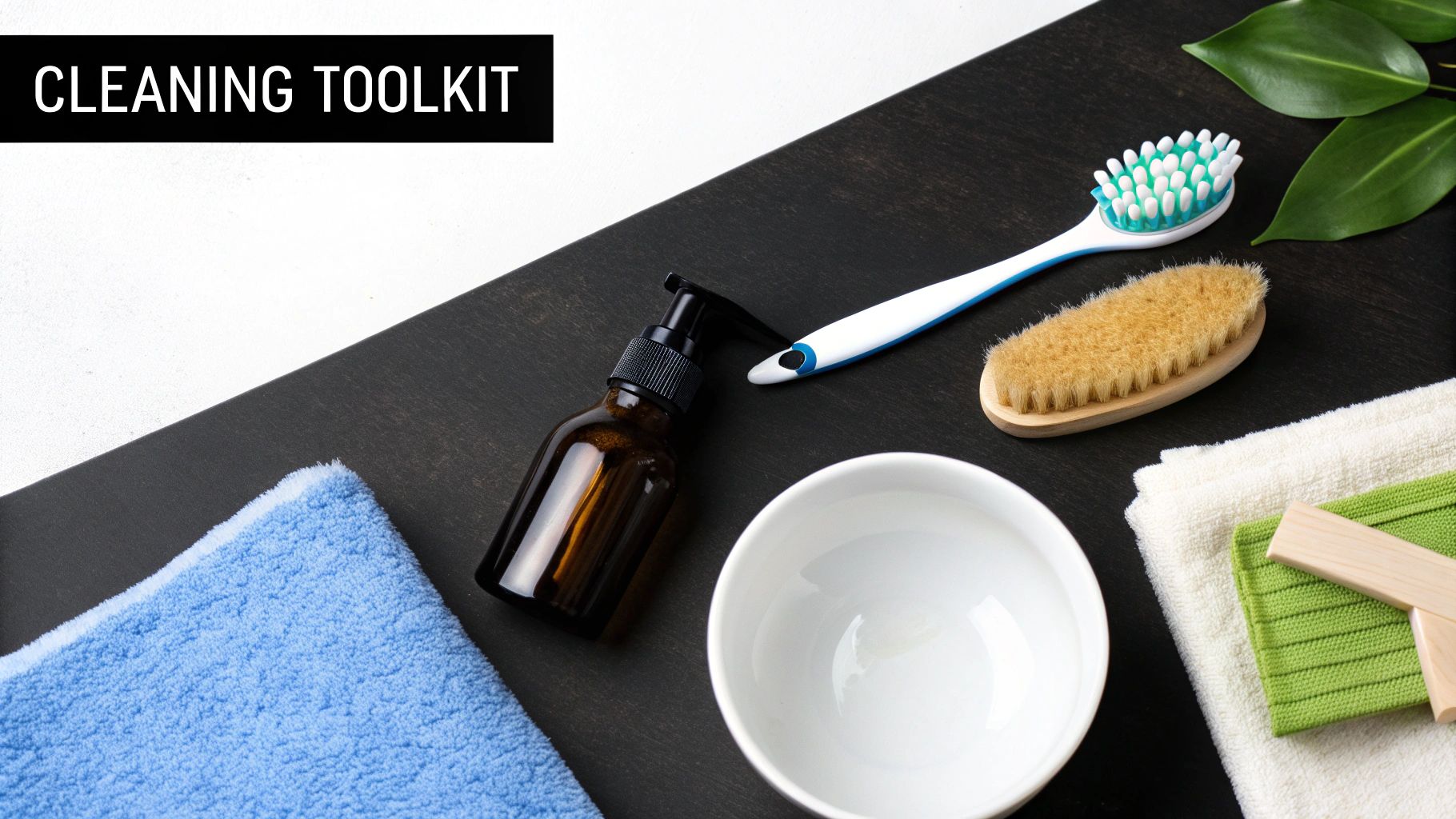
Before you even think about cleaning your ring, the first step is to get your supplies in order. Having a dedicated little toolkit ready to go makes the whole process smoother and, more importantly, safer for your jewelry.
The goal here is simple: to gently lift away all that built-up grime without scratching the metal or leaving behind a cloudy film. The good news? You probably have everything you need right in your kitchen.
The Essentials For a Safe Clean
Putting your kit together is easy. You don't need any fancy, expensive equipment to get that just-bought sparkle back.
Here are the four absolute must-haves for cleaning your moissanite ring the right way:
- A Small Bowl: Just find one that's deep enough for your ring to be completely submerged. A simple teacup or ramekin works great.
- Gentle Dish Soap: You need a mild, degreasing soap. Look for one without harsh chemicals like ammonia or added moisturizers. The classic blue Dawn is a go-to for jewelers for a reason—it’s fantastic at cutting through oils and lotions without leaving residue.
- A Soft-Bristled Brush: This is key. A baby toothbrush is your best friend here. The bristles are ultra-soft and perfect for getting into all the tiny crevices of your setting without scratching the gold or platinum.
- A Lint-Free Cloth: A microfiber cloth, like the one you use for your eyeglasses or sunglasses, is perfect for drying. It won't leave behind annoying little fibers that get snagged in the prongs.
A quick pro tip: Steer clear of paper towels or tissues for drying. Their fibers can break off and get stuck in the setting, and believe it or not, some can be abrasive enough to leave micro-scratches on softer metals over time.
With these four simple items, you’re all set for a safe and effective clean. For a deeper dive into long-term care, check out our complete guide on how to care for your moissanite jewelry to keep it looking brilliant for a lifetime.
The Jeweler-Approved Soak and Scrub
If you're wondering how to safely clean your moissanite ring at home, there's one tried-and-true method that nearly every jeweler recommends: the simple soak and scrub. It’s the gold standard for a reason. This technique is incredibly effective at bringing back that signature moissanite fire, but gentle enough for your regular monthly cleanings.
What I love about this approach is that you don't need any fancy equipment. It just takes a few common household items and about 20 minutes to dissolve the daily buildup of lotions, oils, and grime that can make your stone look dull.
Mixing Up the Perfect Cleaning Bath
First things first, let's get your cleaning solution ready. Grab a small bowl—a teacup works great for this—and fill it with warm water. You're aiming for a comfortable bath temperature, not boiling. If it's too hot for your hand, it's definitely too hot for your ring.
Now, add a few drops of a gentle, grease-cutting dish soap. I always recommend original blue Dawn because it’s specifically designed to break down oils and won't leave a film behind. Just give the water a little swirl to mix the soap in. You don't need a huge amount of suds, just a simple, sudsy bath.
The Soak and Gentle Scrub
Here's where the real work gets done. Gently place your moissanite ring into the soapy water and just let it sit. Give it a good 15 to 20 minutes to soak. This allows the warm, soapy water to work its way into all the tiny crevices of the setting and loosen up any stubborn grime.
This soaking step is actually doing most of the work for you. In fact, it’s the cornerstone of professional advice—85% of jewelers recommend it because a 10-20 minute soak in lukewarm water with a pH-neutral soap can dissolve up to 70% of buildup on its own. For a deeper dive into these pro tips, check out the comprehensive guide on how to clean moissanite rings.
A Quick but Crucial Tip: Always, always plug the sink drain before you start. It’s a tiny step that has prevented countless heart-stopping moments.
Once the ring has had a good soak, it's time for a gentle scrub. Grab a very soft-bristled toothbrush—a baby toothbrush is perfect for this. Carefully brush the stone and setting, paying special attention to the spots where dirt loves to hide:
- Directly underneath the moissanite
- Around the base of the prongs
- Inside any pavé or channel settings on the band
Remember to be gentle. You're not trying to scour the ring, just dislodge the dirt that the soak has already loosened.
Rinsing and Drying for That Final Sparkle
With the scrubbing done, the final step is a good, thorough rinse. Hold your ring under a gentle stream of warm running water. Turn it over a few times to make sure you wash away every last bit of soap and grime. A cloudy or filmy look after cleaning is almost always caused by leftover soap residue, so don't rush this part.
Finally, pat your ring dry with a soft, lint-free cloth. A microfiber cloth is ideal because it won't leave behind tiny fuzzies that can get caught in the prongs. For that extra bit of shine, you can give it one last buff with a clean, dry part of the cloth. And that's it! Your moissanite ring will look as brilliant and fiery as the day you first put it on.
Tackling Stubborn Buildup With Deeper Cleaning
Sometimes, the simple soak-and-scrub method just won't cut it. When your moissanite's signature fire seems a bit dim, it’s usually because of heavy buildup from lotions, oils, and everyday grime. This stubborn film can be tough to dissolve, especially if it's been a while since its last good clean.
The good news is you don’t need to reach for harsh chemicals. You can create a powerful and safe cleaning solution right at home with a couple of household staples. These ingredients work together to lift dirt from even the most intricate settings without any aggressive scrubbing.
The Fizzing Power Of Baking Soda And Vinegar
For a really deep clean, a mixture of baking soda and vinegar creates a gentle fizz that’s incredibly effective. This method is fantastic for rings that have lost their luster under layers of stubborn buildup.
The magic is in that fizzing reaction. When you combine baking soda and white vinegar, they release carbon dioxide bubbles. Think of these tiny bubbles as miniature scrubbers that work their way into all the nooks and crannies of your ring’s setting, actively dislodging and lifting away grime.
This gentle action does the hard work for you, which makes it an excellent choice for delicate pavé or halo settings where you want to avoid too much direct brushing.
This isn't just a new trick. Historical data from the 1990s, when moissanite first hit the jewelry scene, showed this classic combination successfully restored 90% of dulled stones in early tests. Modern lab results confirm it can cut through tough grime by 75%. The vinegar's acetic acid dissolves mineral buildup, while the baking soda provides a mild, non-abrasive polish.
Choosing The Right Commercial Jewelry Cleaner
If you'd rather use a pre-made solution, many commercial jewelry cleaners are perfectly safe and effective for moissanite. The trick is to read the label carefully.
A few things to look for:
- Formulas Safe for All Metals: Double-check that the cleaner is compatible with your ring's metal, whether it's gold, platinum, or silver.
- No Harsh Chemicals: Steer clear of any cleaners containing ammonia, chlorine, or other aggressive agents. These can damage metal plating or even the setting over time.
- Gentle Ingredients: The best cleaners often use gentle, plant-based surfactants that are tough on grime but easy on your jewelry.
A good commercial cleaner is a convenient option for your monthly deep clean. It's formulated to dissolve residue and leave behind a brilliant, streak-free shine. This is especially helpful for maintaining the stone’s incredible ability to perform in different environments, which you can learn more about in our guide on why moissanite sparkles differently in every lighting condition.
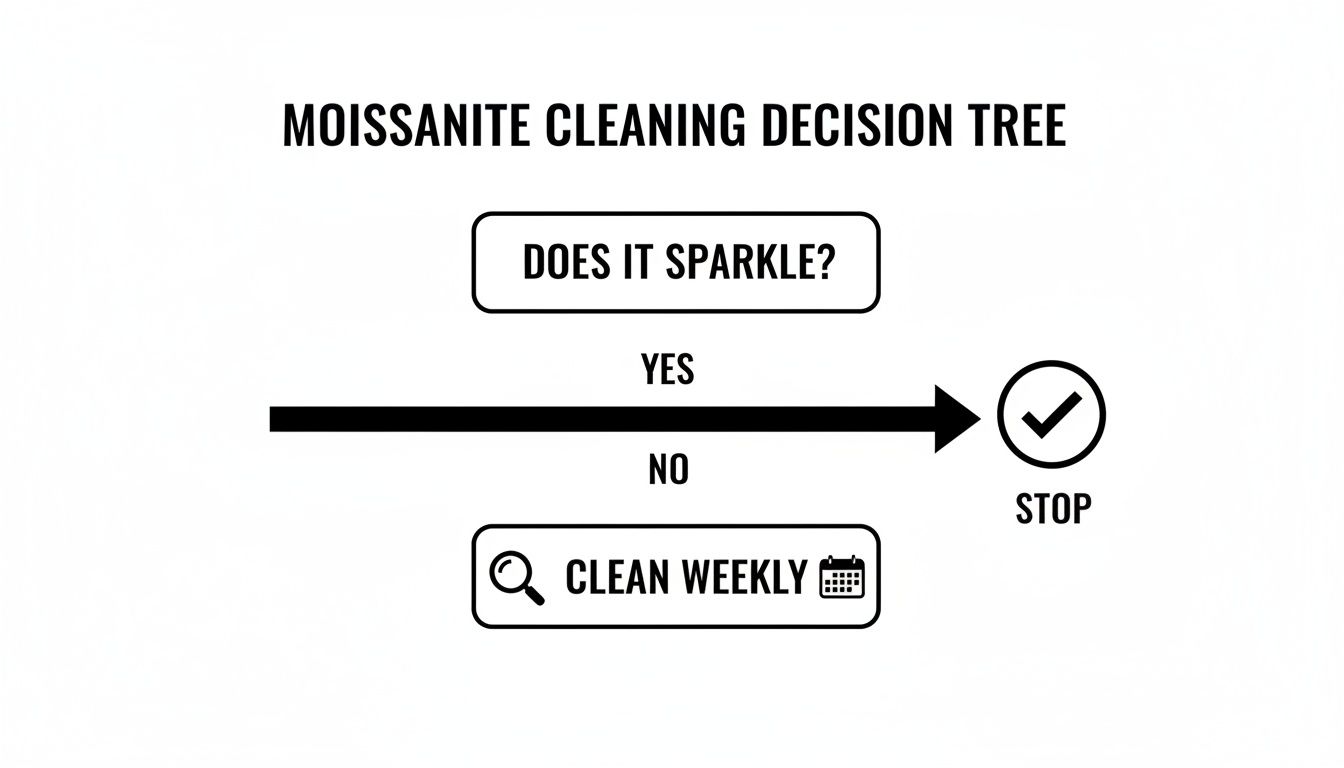
When in doubt, this little decision tree is a great visual reminder. If the sparkle is gone, it’s time for a clean
Common Cleaning Mistakes That Can Damage Your Ring
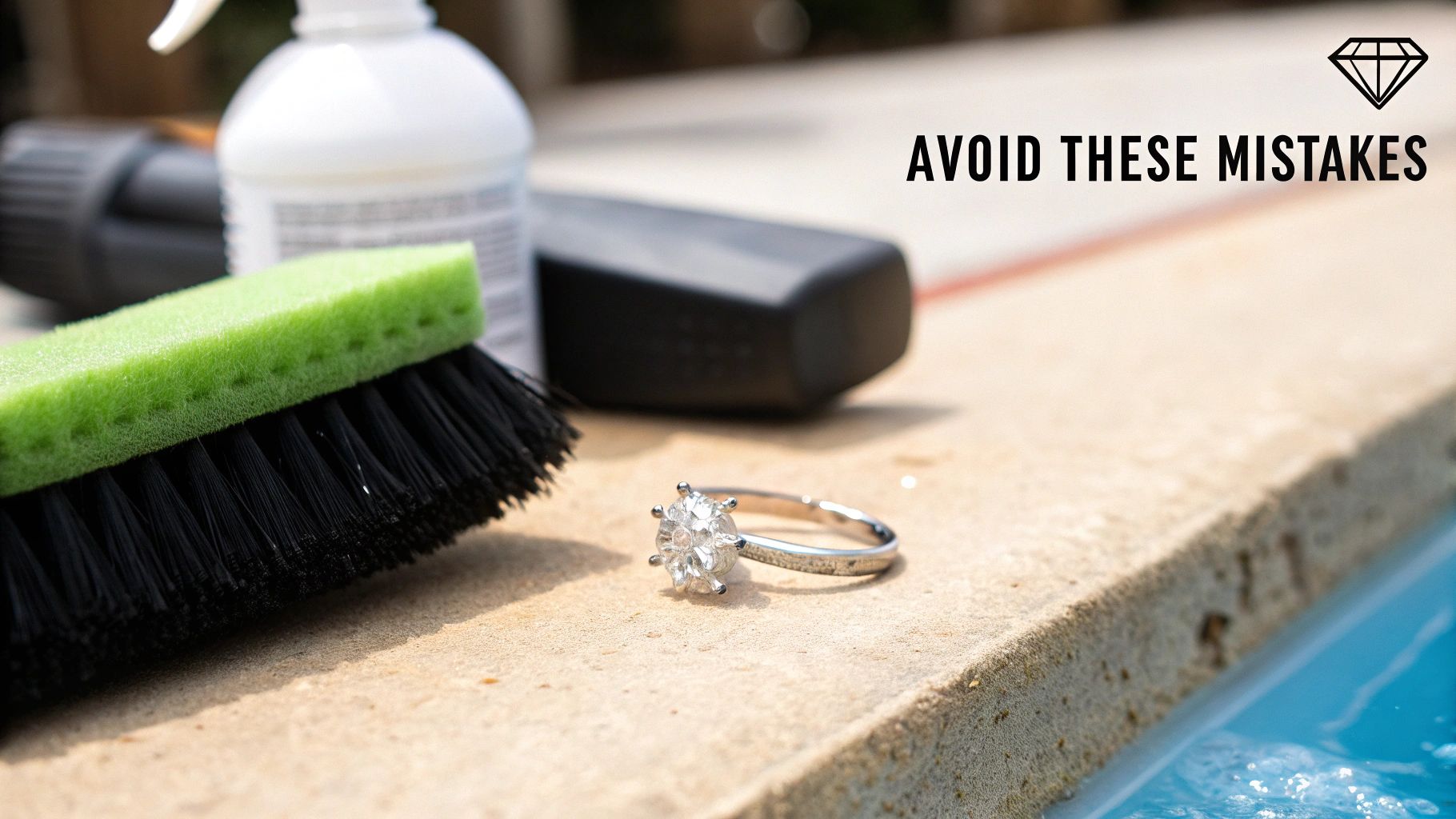
Knowing the right way to clean your moissanite ring is only half the battle. The other half is knowing what not to do. It’s easy to make a simple mistake with the wrong product, and while the moissanite stone itself is incredibly durable, the precious metal holding it can be surprisingly vulnerable.
Many common household products seem like a quick fix, but they can be downright destructive. Understanding these pitfalls is the key to keeping your ring looking its best for years. By steering clear of a few key culprits, you can ensure your cleaning efforts help, not harm.
Harsh Chemicals to Always Avoid
Certain chemicals are notorious for their ability to corrode or discolor precious metals. While moissanite can stand up to a lot, the gold, platinum, or silver setting it in is a different story. Think of the setting as the beautiful, yet delicate, foundation for your stone.
To keep that foundation secure, never let your ring come into contact with these substances:
- Chlorine: This is a big one. It's in swimming pools, hot tubs, and of course, household bleach. Chlorine can eat away at the alloys in your ring's metal, leading to discoloration and even making it brittle over time.
- Acetone: Found in most nail polish removers, acetone can easily dull the finish of precious metals and may even damage certain coatings or intricate settings.
- Ammonia: While a very heavily diluted ammonia solution can be used with caution by professionals, the concentrated ammonia in many household cleaners (like some window sprays) is far too harsh. It's especially notorious for stripping the rhodium plating right off white gold.
A good rule of thumb I always tell people is this: If a chemical is harsh enough that you'd wear gloves to protect your hands, it's definitely too harsh for your ring. Always take your jewelry off before you start cleaning the house.
The Problem With Abrasive Materials
It can be tempting to grab something with a little grit to scrub away stubborn grime, but this is a fast track to a scratched-up ring. Abrasive materials will absolutely damage the metal setting. Even tiny "micro-scratches" build up over time, leaving the band with a dull, worn-out appearance.
Avoid these common abrasives at all costs:
- Toothpaste: Many toothpastes contain baking soda or other gentle abrasives that are great for your teeth but terrible for jewelry. They will easily scratch gold and platinum.
- Stiff-Bristled Brushes: Anything other than a super soft, baby-bristle toothbrush is going to scratch the metal. The idea is to gently dislodge dirt, not scour the surface like you're cleaning a pan.
- Powdered Cleansers: Products like Comet or Ajax are designed for tough surfaces like sinks and tubs. They will cause significant, visible scratching and completely ruin the finish of your ring.
Instead of reaching for something rough, let a good, long soak in the proper solution do the heavy lifting. When the grime is already loosened, you’ll only need the softest touch to bring back your moissanite’s incredible sparkle.
Frequently Asked Questions About Moissanite Care
Even with a great guide, it's natural to have a few more questions pop up. Let's tackle some of the most common things people ask about keeping their moissanite rings looking incredible. We'll give you clear, practical answers so you can care for your ring like a pro.
How Often Should I Clean My Moissanite Engagement Ring?
If you wear your ring every day, a quick weekly cleaning is a fantastic habit to get into. Think of it as maintenance—it keeps the daily buildup from lotions, soaps, and natural skin oils from getting out of hand. All it takes is a simple 15-minute soak in warm, soapy water and a light pass with a soft brush. It’s a tiny effort for a huge payoff in sparkle.
For a deeper clean to really get into the nooks and crannies, aim for a more thorough soak-and-scrub about once a month. To get that fresh-from-the-jeweler look, you could use an at-home ultrasonic cleaner or pop into a professional jeweler once or twice a year. This is especially smart for rings with lots of intricate details.
A key takeaway: Gentle, consistent care beats infrequent, harsh cleaning every time. It's the small, regular touch-ups that truly maintain your moissanite's fire.
Can I Use an Ultrasonic Cleaner on My Moissanite Ring?
For the most part, yes! An ultrasonic cleaner is generally safe for moissanite. The stone itself is a powerhouse, rating a 9.25 on the Mohs scale of hardness, so the machine's high-frequency sound waves won't harm it.
The real thing to consider isn't the moissanite but the metal setting holding it.
- Good to Go: Solitaire and bezel settings are typically very sturdy and handle ultrasonic cleaning without any issues.
- Use Caution: For pavé, micropavé, or channel settings, those intense vibrations could potentially jiggle a tiny stone loose.
If your ring features a lot of small, delicate stones, it’s always wise to get your jeweler’s opinion before using an ultrasonic cleaner at home. But for simple, secure settings, it's a fantastic tool for a deep clean.
Why Does My Moissanite Look Cloudy or Filmy?
That dreaded cloudy or "oily" look on a moissanite is almost always just surface-level gunk. It’s a thin film of residue from everyday life—hand lotion, soap scum, skin oils, and even mineral deposits from hard water. This layer acts like a barrier, stopping light from entering the stone and dulling its famous sparkle.
Getting rid of it is easy. A good, thorough cleaning with warm, soapy water is your best bet. Let the ring soak for at least 20 minutes to give the soap time to break down all that buildup. Then, grab a soft brush and gently scrub everywhere—the top, the sides, and especially the underside of the stone. That’s where grime loves to collect. A final, complete rinse under warm running water will wash away any leftover soap and reveal the brilliance underneath.
Is It Safe to Clean My White Gold Moissanite Ring at Home?
Absolutely, as long as you use the right stuff. The secret to cleaning a white gold moissanite ring is being kind to the metal. White gold gets its bright, silvery shine from a rhodium plating, and harsh chemicals or abrasive scrubs can wear that plating away over time.
Stick with the basics: a mild, ammonia-free dish soap and warm water. Steer clear of stiff-bristled brushes and definitely avoid abrasive cleaners like baking soda or toothpaste, which can leave tiny scratches on the rhodium finish. The gentle soak-and-scrub method we’ve talked about is perfectly safe and works beautifully for white gold, yellow gold, rose gold, and platinum.
At Moissanite Diamond, we’re passionate about making brilliant, beautiful jewelry a part of everyone’s story. Our collections are ethically sourced and expertly crafted to deliver a lifetime of stunning sparkle. Find the perfect piece to represent your journey by exploring our curated moissanite rings.